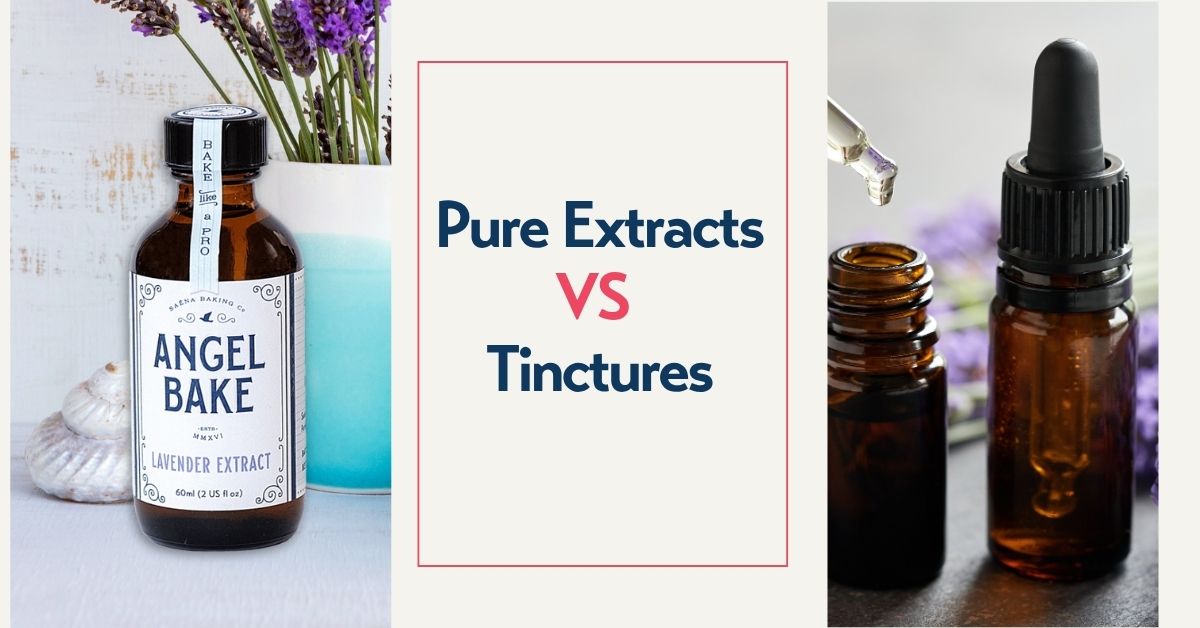
You’re looking at a bottle of lavender extract and a bottle of lavender tincture. Both are small. Both are dark glass. Both claim to deliver the flavor and wellness properties of the plant. So what’s the difference — and does it actually matter?
It matters quite a bit, especially when you’re cooking, baking, or crafting a drink. Here’s the clear, no-jargon breakdown.
The short answer
A pure extract is made specifically for culinary use — concentrated, consistent, and designed to perform across every application from a lavender latte to a rose macaron. A tincture is primarily a wellness product — optimized for sublingual use or wellness routines rather than the precise flavor delivery a kitchen demands.
What is a pure culinary extract?
A pure extract is a concentrated botanical flavor made by macerating or distilling a plant material — flowers, roots, seeds, bark — in a food-grade alcohol base. The goal is maximum flavor intensity with minimum volume. A few drops of Angel Bake pure Bulgarian lavender extract delivers the full aromatic profile of freshly harvested Lavandula angustifolia. A half teaspoon flavors a full batch of macarons.
Pure extracts are built for the kitchen. They are formulated to perform consistently across baking, beverages, and confectionery; withstand heat without losing character; integrate cleanly into both water-based and fat-based applications; and deliver the same result from batch to batch.
The best pure extracts — like Angel Bake Culinary Aromatics — are also free from added sugar, propylene glycol, and artificial enhancers. What you taste is the botanical, nothing else.
What is a tincture?
A tincture is a plant extract made by soaking botanical material in alcohol to pull out the plant’s active compounds. Tinctures have a long history in herbal wellness traditions, where they were used to capture and preserve the properties of plants.
Tinctures are typically lower concentration than culinary extracts, less filtered, designed for dropper use under the tongue or in water, and not optimized for heat stability or culinary performance.
This doesn’t make tinctures inferior — it makes them different. A chamomile tincture from a wellness brand is doing a different job than Angel Bake pure chamomile extract. One is designed for your wellness routine; the other is designed for your kitchen.
Side by side: extract vs tincture
Flavor concentration: Pure extracts are significantly more concentrated. A few drops go a long way.
Heat stability: Pure culinary extracts are formulated to hold their character through baking temperatures. Tinctures are not.
Flavor clarity: Pure extracts deliver a clean, precise botanical note. Tinctures sometimes carry earthy or herbal undertones from the maceration process.
Sugar content: Many wellness tinctures contain glycerin or honey as a sweetener and preservative. Angel Bake pure extracts contain no added sugar.
Applications: Pure extracts excel in baking, drinks, syrups, cocktails, and confectionery. Tinctures are best in water, tea, or wellness routines.
What about the health benefits?
Lavender has traditionally been associated with calm and stress relief. Chamomile has traditionally been used for relaxation and sleep support. Ginger has a long history of traditional use for digestive wellness. Angel Bake pure extracts are culinary flavor ingredients made from these botanicals. They are intended to provide flavor and aroma in food and drink, not to diagnose, treat, cure, or prevent any condition and not as a substitute for a dietary supplement.
When to choose a pure extract
Choose a Culinary Aromatics extract for beverages, syrups, cocktails, finishing, and aqueous or alcohol-compatible formulations. For chocolate, cocoa liquor, ice cream, candy, cake batter, buttercreams, fillings, breads, sauces, dressings, and other fat-phase or high-heat applications, an MCT-based Pure Infusions flavor oil is often the more optimal starting point. For dry systems or flavor protection through processing and storage, Culinary Crystals and Encapsulated Essences are available as made-to-order B2B formats; contact Saena to discuss the application. Compare the options in our flavor-format guide.
Explore Angel Bake pure extracts
Every extract in the Culinary Aromatics collection is made without added sugar, without propylene glycol, and without WONF. Kosher PAREVE certified, NSF GMP-HACCP certified, FEMA GRAS compliant, gluten-free, non-GMO, vegan, and keto-friendly.
Explore the full Angel Bake Culinary Aromatics collection →
An Angel Bake post by Saena Baking Co.