When you are sourcing flavor for a culinary project, the carrier matters as much as the botanical. Oil-based and alcohol-based extracts both deliver extraordinary flavor, but they behave differently in different applications, and choosing the wrong one can affect texture, clarity, and performance in ways you will not discover until the batch is already made.
The fundamental difference
An alcohol-based extract uses food-grade ethanol as its carrier. Alcohol is an excellent solvent. It pulls a wide range of flavor compounds from botanical material efficiently and holds them in stable suspension. The result is a clear or lightly colored liquid that integrates cleanly into most applications.
An oil-based flavor uses a food-grade oil and in the case of Angel Bake Pure Infusions, MCT oil (caprylic/capric triglycerides) derived from coconut as its carrier. Oil captures flavor compounds differently and integrates naturally into fat-based applications without the water-activity concerns that alcohol-based extracts can create in moisture-sensitive work.
When to choose alcohol-based extracts
Alcohol-based extracts are the workhorses of the culinary world. They belong in baking — cakes, cake filling, cookies, macarons, honey, jams, shortbread, tarts; beverages — lattes, syrups, cocktails, mocktails, cold brew; ice cream and frozen desserts; and sauces and dressings where they disperse evenly through water-based liquids.
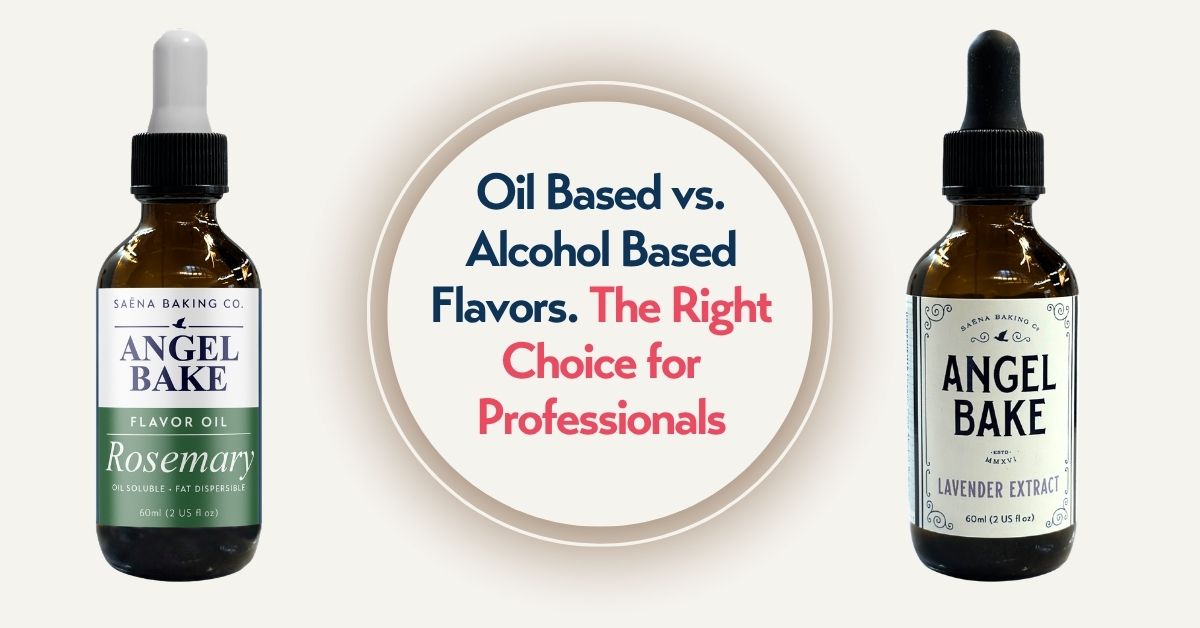
Angel Bake Culinary Aromatics extracts are alcohol-based. They are designed for the widest possible range of culinary applications from a lavender latte to a rose macaron, a peppermint bark to a cardamom chai.
When to choose oil-based flavor
Oil-based flavors belong in fat-based applications where water is either absent or a liability. Chocolate is the clearest example — water causes chocolate to seize. Oil-based flavors integrate cleanly without this risk. They are also the right choice for ganache and truffle shells, compound chocolate and coatings, keto fat bombs, and oil-infused preparations like dressings, finishing oils, and infused butters.
Angel Bake Pure Infusions flavor oils use MCT as the carrier chosen specifically because MCT is neutral in flavor, crystal clear, resistant to oxidation, and stable at both room temperature and freezing temperatures. Unlike seed oil carriers, MCT will not go rancid or develop off-notes over time.
The chocolate question
Chocolate is the application where carrier choice matters most. Introduce water into tempered chocolate and it seizes into a grainy, unworkable mass. This is why professional chocolatiers specifically seek oil-soluble flavors for chocolate work. Angel Bake Pure Infusions flavor oils are designed for exactly this application; crystal clear, MCT-based, with no water content.
Can you use them interchangeably?
In beverages, syrups, cocktails, finishing, and other aqueous or alcohol-compatible systems, alcohol-based extracts are usually the preferred starting point. In formulations with a meaningful oil or fat phase — including chocolate and cocoa liquor, ice cream, candy, cake batter, buttercreams, fillings, breads, sauces, and dressings — MCT-based Pure Infusions flavor oils are often more optimal, particularly when the process involves high heat. Angel Bake Culinary Aromatics contain no added water and have also been tested successfully in chocolate liquor, so they can be compatible with certain moisture-sensitive formulations; however, the oil-based format remains the recommended starting point for professional fat-phase systems.
Angel Bake: both lines, one standard
Angel Bake offers both product lines to cover every culinary application. The Culinary Aromatics collection covers alcohol-based extracts for baking, beverage, and cocktail applications. The Pure Infusions collection covers MCT-based flavor oils for chocolate, confectionery, and fat-based work. Both lines are Kosher PAREVE certified, NSF GMP-HACCP certified, FEMA GRAS compliant, gluten-free, non-GMO, and vegan.
Explore Culinary Aromatics extracts →
Explore Pure Infusions flavor oils →
For dry systems, immediate dry dispersion, or flavor protection through processing and storage, Culinary Crystals and Encapsulated Essences are available as made-to-order B2B formats. Discuss your application with Saena, or compare all four lines in the Angel Bake flavor-format guide.
An Angel Bake post by Saena Baking Co.