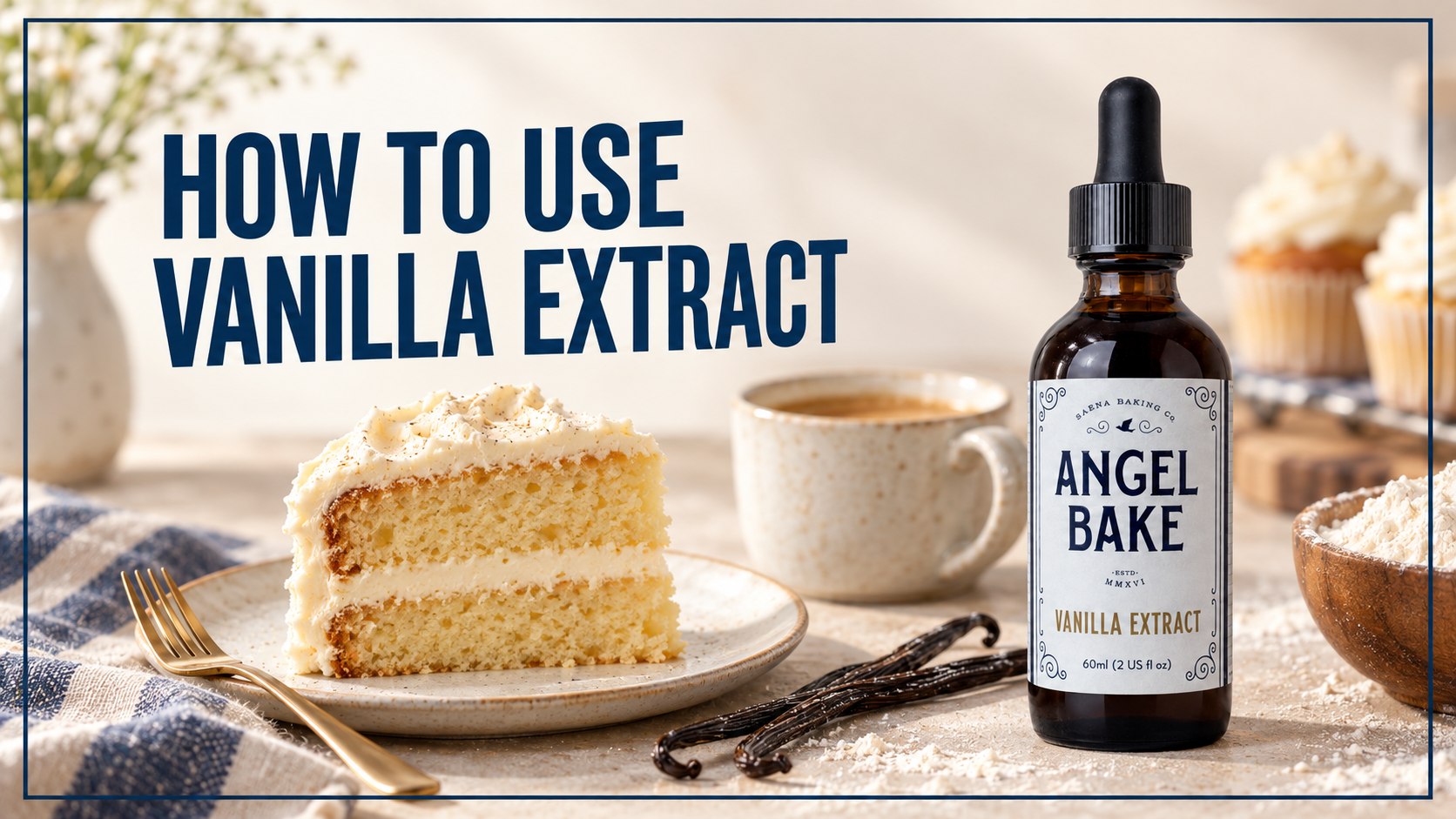
If you are deciding how to use vanilla extract, begin with the role you want it to play. Vanilla can be the flavor everyone notices, or it can sit quietly behind butter, chocolate, coffee, fruit, and warm spices and make the whole recipe feel more complete.
Vanilla works in more than one way
- Let it lead in simple recipes. Shortbread, vanilla cake, custard, whipped cream, and a plain latte give its aroma room to open.
- Use it to connect other flavors. Chocolate, coffee, caramel, nuts, citrus, and spice often taste rounder when vanilla fills the space between them.
- Add it with a compatible liquid. In most batters, drinks, syrups, and frostings, mix the extract into the wet ingredients before the mixture becomes thick.
- Taste the finished application. Cold dairy, hot coffee, baking heat, and strong cocoa can each change how much vanilla you notice.
How to use vanilla extract when vanilla is the main flavor
Vanilla has nowhere to hide in a simple cake, custard, butter cookie, or whipped cream. That is useful. It lets you notice whether the extract reads as warm and woody, soft and floral, or sharp against the other ingredients.
Angel Bake® Pure Madagascar Vanilla Extract combines Planifolia and Tahitian vanilla. Planifolia supplies the familiar deep vanilla body, while Tahitian vanilla contributes a more floral edge. In a simple base, that combination creates dimension without asking sugar to do all the work.
Vanilla extract has a defined identity
The United States standard for vanilla extract specifies vanilla constituents in an alcohol and water solution with at least 35 percent alcohol by volume. You can read the current definition in 21 CFR 169.175. The carrier is part of how vanilla aroma is extracted and delivered, not an accidental ingredient.
Cakes and quick breads want vanilla in the wet phase
For cakes, muffins, loaf cakes, and quick breads, stir the vanilla into the wet ingredients. That may be the eggs, milk, cream, or another liquid component. Early mixing gives the extract a chance to spread before flour thickens the batter.
Vanilla can lead, but it is just as valuable in recipes named for something else. In banana bread it rounds the ripe fruit. In chocolate cake it softens hard edges in the cocoa. In a spice cake it joins cinnamon, ginger, and clove without turning the cake into a vanilla dessert.
Cookies show whether vanilla is a headline or a supporting note
Sugar cookies and shortbread make vanilla easy to recognize. Chocolate chip cookies, molasses cookies, and nut cookies use it differently. There, vanilla sits underneath the obvious flavor and makes the finish feel longer and less abrupt.
Mix the extract with the egg or another wet ingredient before it meets the flour. In a butter rich dough, take a moment to mix thoroughly. A finished cookie should not offer one isolated pocket of aroma and then none in the next bite.
Frosting needs a final taste after the sugar is in
Buttercream can mute vanilla because butter and sugar both absorb attention. Add the extract while the frosting is mixing, then taste only after the texture and sweetness are where you want them. A thin, unfinished frosting will not tell you how the aroma will read on the cake.
Cream cheese frosting brings tang. Chocolate frosting brings bitterness. Meringue buttercream is lighter and less sweet. The same vanilla will seem different in each one, which is why a recipe name is not a substitute for tasting the complete base.
Coffee uses vanilla best when sweetness stays a separate decision
Vanilla and coffee share roasted, warm, and slightly bitter notes, so they meet easily. An unsweetened extract lets you decide how much vanilla the drink needs before deciding how sweet it should be. That is useful in a latte, cold brew, mocha, or a syrup made for several drinks.
In hot coffee, aroma rises quickly. In iced coffee, cold temperature can make it seem quieter. Build the finished drink with milk, ice, and sweetener before making the final judgment.
Custards and cold desserts reveal vanilla after resting
Custard, panna cotta, cheesecake, ice cream, and whipped cream often taste different after chilling. Vanilla that seemed modest while the base was warm may become clearer after the fat has set and the other aromas have settled.
Add the extract at a point where it can disperse evenly, then evaluate the dessert at its serving temperature. That small discipline is more useful than chasing a universal quantity.
| Pair vanilla with | What vanilla contributes | Good starting applications |
|---|---|---|
| Chocolate and cocoa | Rounds bitterness and extends the finish | Cake, brownies, frosting, mocha |
| Coffee and caramel | Connects roasted and cooked sugar notes | Latte, cold brew, caramel sauce |
| Orange and lemon | Softens sharp citrus edges | Cakes, glaze, custard |
| Cinnamon and clove | Creates a warmer, fuller spice profile | Cookies, quick breads, holiday drinks |
| Almond and nuts | Adds softness around toasted notes | Cookies, pastry cream, frosting |
For the seasonal view, continue to our guide to flavor extracts for holiday baking. Vanilla is the quiet connector in that group, while peppermint, orange, clove, and pumpkin spice provide the more obvious direction.
Start with a vanilla that can lead or support
Use Pure Madagascar Vanilla Culinary Aromatics® in baking, coffee, frosting, custards, and desserts. Browse all Angel Bake flavoring extracts, or see commercial sizes for bakery, café, and production use.