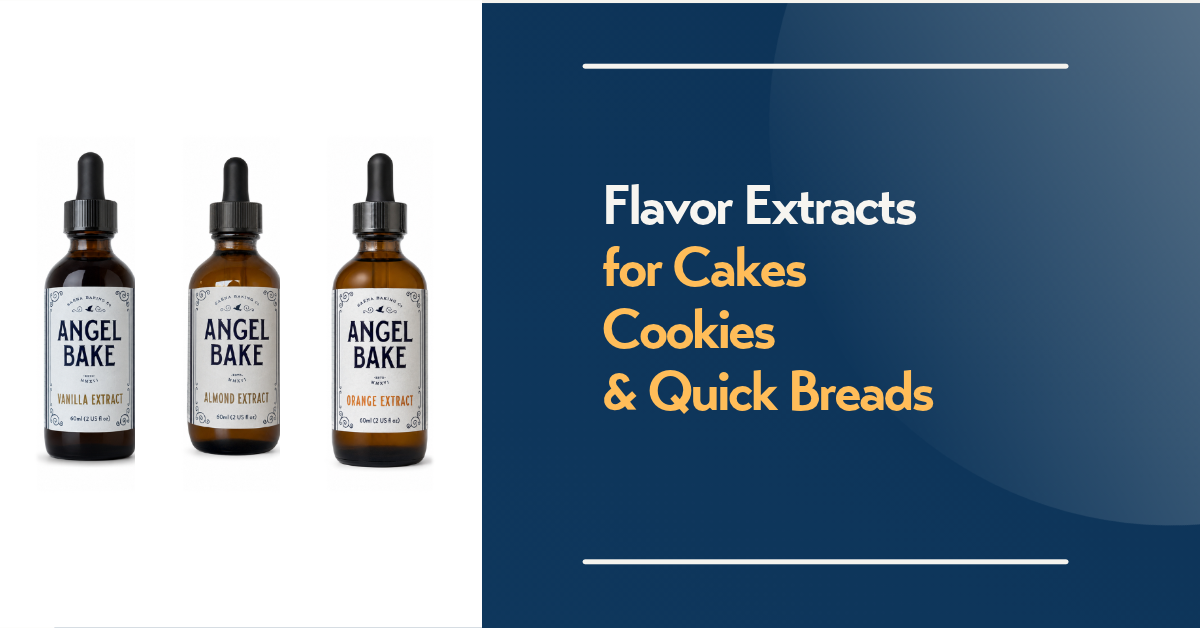
The best flavor extract for baking is the one that tells people what they are eating before they take a bite. Vanilla quietly rounds out almost anything. Almond, Valencia orange, cardamom, and the Bulgarian florals change the whole personality of a cake, a cookie, or a loaf. Here is how to choose, where each one shines, and how much to use.
- Vanilla is the foundation. Use it one for one with your recipe and let it support everything else.
- Pick one lead flavor. Almond, orange, cardamom, lavender, or rose should be the clear headline in a bake, not a crowd.
- Add the extract with the wet ingredients. It spreads evenly before the flour goes in.
- Concentrated flavors go by the cup. 5 to 7 drops per cup of batter or dough is the starting point.
Vanilla does the supporting work in almost every bake
Vanilla makes butter taste richer, chocolate taste deeper, and fruit taste rounder, often without anyone naming it. Keep it in the recipe even when another flavor leads. A banana bread with vanilla tastes more like banana, not less.
Angel Bake Pure Vanilla Extract, Planifolia & Tahitian is a standard strength extract, so use exactly what your recipe calls for. For more ways to use it, read our guide to vanilla as a lead or supporting flavor.
Match the flavor to the bake
Each concentrated Culinary Aromatics® extract has a home where it reads clearly. These pairings are classic bakery favorites and a good place to start your own versions.
| Flavor | What it tastes like | Bake it into |
|---|---|---|
| Almond | Sweet, toasty, marzipan bright | Almond sugar cookies, cherry cake, biscotti |
| Valencia orange | Juicy peel, sweet citrus | Orange cranberry scones, olive oil cake, shortbread |
| Cardamom | Warm, green, slightly citrusy spice | Cardamom snickerdoodles, cardamom buns, pear cake |
| Bulgarian lavender | Soft floral with an herbal edge | Lavender shortbread, lemon lavender loaf |
| Bulgarian rose | Fresh rose petal, honeyed | Rose and pistachio cake, raspberry rose cookies |
| Lemon | Bright zest without the bitterness | Lemon pound cake, lemon crinkle cookies |
Cakes: flavor the batter or flavor the frosting
For a lemon pound cake, add lemon extract to the butter and sugar after creaming, alongside the eggs and vanilla. The flavor carries through the whole crumb and survives the long bake.
For layer cakes and cupcakes, you often get more impact by flavoring the frosting or filling instead. A plain vanilla sponge with a rose buttercream tastes clearly of rose, while rose in the sponge alone can fade behind the frosting. Our guide to flavoring buttercream and frosting covers that side.
Cookies: butter carries flavor beautifully
Butter rich doughs hold aroma well, which is why almond sugar cookies and lavender shortbread are such good showcases. Add the extract with the butter and sugar so it is evenly distributed before the flour.
Cardamom snickerdoodles are an easy upgrade: keep the cinnamon sugar coating and put cardamom in the dough. The two spices layer rather than compete. For shortbread made with a lot of butter, a Pure Infusions™ flavor oil is another good choice, since it blends straight into the fat.
Quick breads and scones: one flavor, clearly
Quick breads already carry banana, pumpkin, zucchini, or fruit. Choose an extract that supports that ingredient. Banana bread loves vanilla with a few drops of cardamom. Orange cranberry scones get a sharper citrus note from Valencia orange in the dough, with no extra juice to make the dough wet.
An extract adds flavor, not moisture or body, so keep the recipe’s puree, zest, and liquid exactly as written.
Layering two flavors without muddying either
Once you know how a single flavor behaves in your recipe, a second one can add depth. The rule that works best is one lead and one supporting note. Almond leads and vanilla supports in a cherry cake. Valencia orange leads and cardamom supports in a holiday loaf. Lavender leads and lemon supports in shortbread.
Keep the supporting flavor at about a third of the lead, and let the frosting or glaze echo the lead flavor. That way the whole bake reads as one idea. For seasonal pairings, see our holiday baking flavor guide.
How much to use
| Where the flavor goes | Starting amount |
|---|---|
| Batter or dough (cakes, cookies, quick breads, scones) | 5 to 7 drops per cup of batter or dough |
| Frosting, filling, whipped cream, glaze | 3 to 5 drops per cup |
| Vanilla extract | The amount your recipe calls for, one for one |
The rates above are a starting point. Taste and adjust; every base is different. Start a little below the baseline with rose and lavender, which are naturally intense. Batter carries more mass per cup than a frosting, so it takes a few more drops to taste the same. Our guide to how much extract to use has the conversions to teaspoons and full batches.
Raw dough tastes louder than the finished bake. Judge the flavor after baking and cooling, then adjust the next batch.
Keep exploring
Find your bakery flavor
Our Culinary Aromatics extracts are No Sugar Added, Kosher Pareve, Non-GMO, Gluten-Free, and vegan, and the concentrated flavors go more than 300 cups per 2 oz bottle. Shop the Culinary Aromatics collection. Running a bakery? Gallon sizes are available through our wholesale inquiry page.